Loading Experience...
Fill out the form and our experts will connect with you shortly to understand your business requirements.
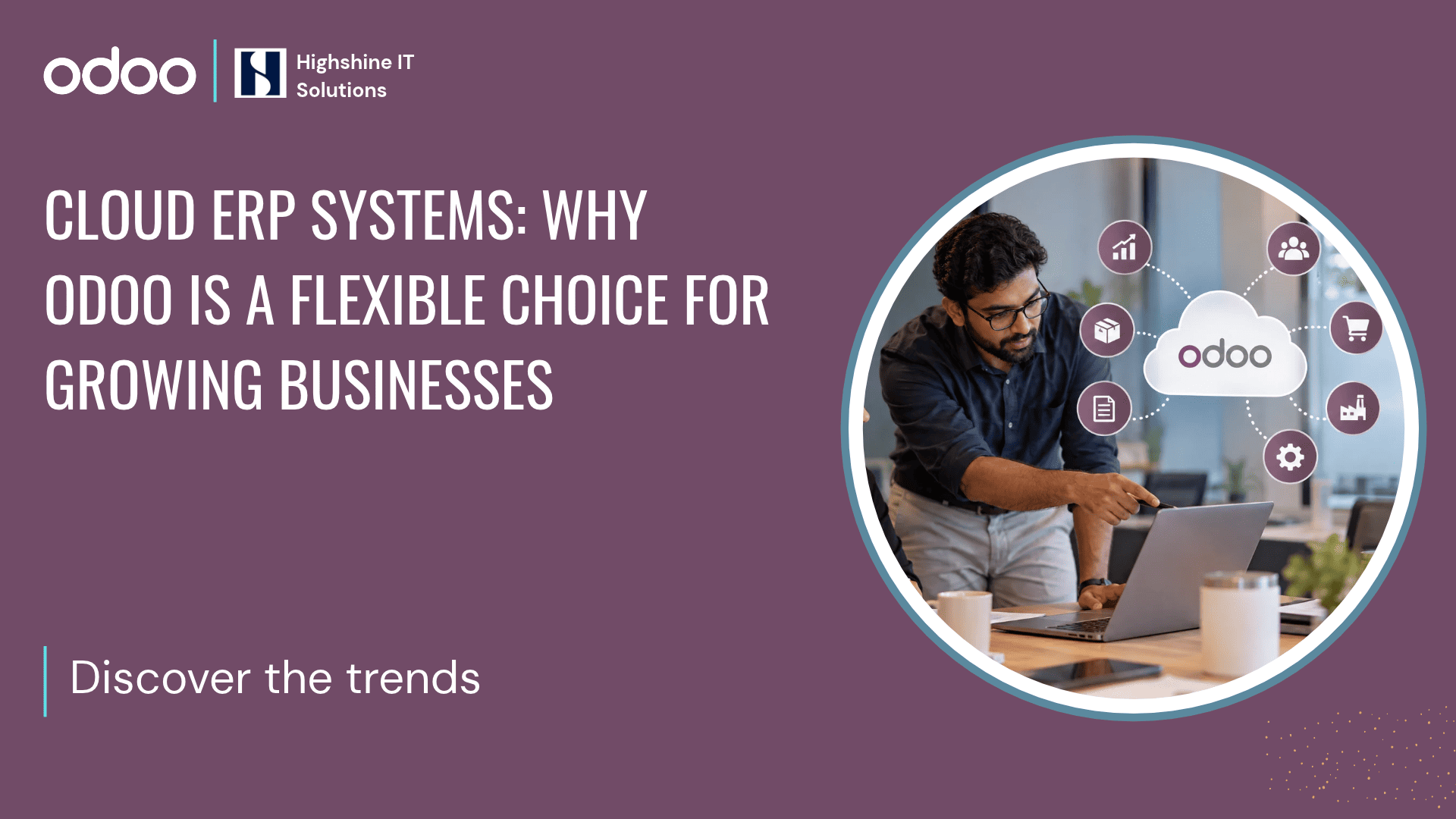
When a growing business starts looking at cloud ERP systems, the evaluation usually starts in the same place: a comparison article ranking ten platforms, a demo request to the three names the CEO recognised, and a shortlist built on who had the most polished sales process. The result, more often than not, is a decision that fits the vendor's packaging better than the business's actual operational stage.
The dominant narrative in cloud ERP software comparisons in 2026 is built around two poles. At one end: NetSuite, SAP S/4HANA, and Oracle Cloud, powerful, proven, and priced for organizations with implementation budgets starting at six figures and timelines measured in quarters. At the other end: point solutions and accounting tools that do not qualify as ERP at all. The businesses that need the most help evaluating cloud-based ERP software are in the middle: growing fast, operationally complex enough to need a genuine ERP, but not yet at the scale where a $300K implementation makes sense.
Odoo exists precisely in that space. And its architectural difference from every other platform on a standard cloud ERP comparison list is the reason it deserves a more precise explanation than ‘budget-friendly open-source option.’
The word most often used to describe Odoo is affordable. That is accurate but incomplete. The more useful description is composable, meaning a business can build its ERP from exactly the modules it needs today, on a deployment model that matches its current infrastructure posture, and expand the system incrementally as the business grows, without a platform migration and without paying for functionality it has not yet reached.
This composability operates at two levels. The first is the module structure. Odoo covers over 82 business applications, including CRM, sales, inventory, manufacturing, purchasing, accounting, HR, project management, e-commerce, marketing automation, and helpdesk, all built on a single unified codebase. A business starting with CRM and accounting has the same data model as one running full manufacturing and supply chain. When new modules are added, they integrate natively rather than requiring an integration project.
The second level is deployment architecture. Odoo is one of the very few cloud ERP platforms that gives growing businesses a genuine choice of three deployment models, each suited to a different operational requirement.
| Option | Odoo Online | Odoo.sh | Community (Self-hosted) |
| Best for | Businesses wanting zero IT overhead | Businesses needing custom code in a managed cloud | Technical teams wanting full control at no licence cost |
| Customization | Configuration only | Full custom modules with Git-based staging | Unlimited, full source access |
| Upgrades | Automatic, managed by Odoo | Assisted, with staging environment | Manual, managed by customer |
| Data residency | Odoo-managed cloud | Odoo-managed cloud with custom apps | Customer's own infrastructure |
| Starting cost | $24.90/user/month | $24.90/user/month + Odoo.sh fee | Free (support costs separate) |
This deployment flexibility matters for a specific reason that most cloud ERP comparisons overlook. Many growing businesses have data residency requirements, existing infrastructure investments, or regulatory considerations that make a fully managed cloud unsuitable. Others want the simplicity of zero IT overhead. Others need custom code in a version-controlled environment that can be tested before it reaches production. Odoo's three-path architecture accommodates all three without requiring a platform change when requirements evolve.
One of the most consistent patterns in how Odoo gets deployed in growing businesses is the phased expansion. A company does not implement 82 modules on day one. It starts with the operational area that is causing the most pain, stabilizes on that module, and expands when the team is ready. This is not a limitation of the platform. It is a deliberate design principle that reduces implementation risk and improves adoption rates.
Most growing businesses reach their first ERP evaluation because they are running four or five disconnected tools and spending significant time on manual data transfers between them. A typical starting configuration covers CRM and sales for customer and pipeline management, inventory and purchasing for stock and supplier management, and accounting for financial visibility. These three areas alone eliminate the most common coordination overhead that slows growing businesses down, and a focused Odoo deployment in these areas typically goes live in eight to twelve weeks.
As the business grows, the next layer is usually manufacturing or project management, depending on the business model, combined with more advanced inventory routing and warehouse management. Because these modules share the same data model as the CRM and accounting already running, the expansion does not require a new implementation. It requires configuration and training, not migration. This is the architectural advantage that separates Odoo from businesses that chose a point solution for accounting and now face a full ERP implementation to get operational depth.
At a more mature stage, growing businesses often add Odoo's ecommerce module to connect their online sales channel directly to inventory and fulfilment, marketing automation to drive lead generation from within the same CRM data, and HR and payroll to consolidate the last remaining external tool. By this stage, the business is running a genuinely integrated enterprise system that shares one database, one customer record, and one financial ledger across every function, at a total cost of ownership that remains a fraction of what enterprise alternatives would require.
The pricing comparison between Odoo and enterprise cloud ERP platforms is often presented superficially, comparing per-user licence fees without accounting for the full year-one cost that includes implementation, customization, training, and migration. The table below uses verified 2026 market data from ERP Research and independent analyst sources to show the realistic total cost picture.
| Platform | Licence (per user/mo) | Typical Year-1 TCO | Best fit |
| Odoo | $24.90 | $10K–$80K | SMEs, mid-market, growing businesses |
| Oracle NetSuite | ~$99 | $100K–$500K | Fast-growing mid-market, global ops |
| Microsoft Dynamics 365 | $70–$180 | $150K–$1M+ | Microsoft-ecosystem enterprises |
| SAP S/4HANA Public Cloud | $180 | $150K–$600K | Mid-market standardizing on cloud ERP |
| Acumatica | Custom (usage-based) | $75K–$350K | SMBs needing unlimited-user pricing |
The year-one gap between Odoo and NetSuite is not simply a function of Odoo being less capable. It reflects a genuine difference in implementation complexity, the overhead of proprietary customization, and the baseline infrastructure cost of enterprise cloud platforms. For a business generating $5M to $30M in annual revenue and looking at its first serious ERP deployment, the difference between a $15K and a $200K year-one cost has direct implications for how quickly the platform can deliver return on investment.
Odoo is rated 4.6 out of 5 by users across G2 and Capterra, and ranked first in both 'Startups, SMEs, and growing companies' and 'open-source ERP for small and growing businesses' categories in multiple independent 2026 ERP rankings. This user satisfaction data matters as an E-E-A-T signal because it reflects the experience of actual businesses running the platform, not controlled product evaluations.
Most enterprise cloud ERP pricing models create a negotiation event every time a business adds users or modules. Odoo's per-user monthly pricing at $24.90 scales transparently. Adding five users adds five times the per-user cost. There are no tier jumps, no renegotiation conversations, and no surprise invoices at renewal.
Odoo's studio tool allows business users to customize views, add fields, create reports, and modify workflows without writing code. For a growing business where the IT team is the founder and one developer, this self-service configurability means the ERP adapts to how the business works rather than requiring expensive consultants every time a process changes.
Most cloud-based ERP software treats ecommerce as an integration point. Odoo's ecommerce module runs on the same database as inventory, sales, and accounting. When a customer places an order on the Odoo website, inventory updates, an invoice is created, and the customer record in CRM reflects the purchase in the same transaction. No sync delays, no integration maintenance, no discrepancy reconciliation.
Growing businesses that operate multiple legal entities, brands, or subsidiaries often discover that their entry-level cloud ERP requires separate instances for each entity, with manual consolidation at month-end. Odoo supports multi-company operations natively, with shared product catalogs, inter-company transactions, and consolidated financial reporting within a single platform instance.
The Odoo Community edition is genuinely free and open source with no trial period. A business can deploy Community, run it in production, and upgrade to the paid Enterprise edition when they need the additional modules and support. This removes the evaluation risk that comes with every other enterprise cloud ERP system, where the trial environment is sanitized, and the real implementation cost is only discovered after the contract is signed.
Getting maximum value from Odoo as a cloud ERP system for a growing business depends on how well the initial deployment is scoped and configured. A deployment that starts with the right modules, the right data model, and the right workflows for the specific business stage sets up every subsequent expansion to work cleanly. One that is too ambitious at the start or too conservative about configuration creates rework that costs more than a properly scoped initial deployment would have.
Highshine IT Solutions is a certified Odoo implementation partner with experience deploying Odoo across manufacturing, distribution, services, and retail businesses. The team structures each engagement around the business's current operational stage, identifies the modules that will deliver the fastest return, and builds the configuration foundation that allows subsequent expansions to land cleanly on the existing data model.
Book a free Odoo consultation with Highshine IT Solutions. Get a deployment recommendation based on your specific business stage, a realistic implementation timeline, and a clear view of how Odoo's modular architecture maps to your operational priorities and growth plans.
Cloud ERP systems in 2026 span an enormous range of capability, complexity, and cost. The right choice for a growing business is not the platform with the most features or the biggest brand recognition. It is the platform whose architecture matches the business's current operational stage and can grow alongside it without requiring a migration, a renegotiation, or a second implementation.
Odoo's three deployment options, modular application structure, transparent per-user pricing, and open-source architecture make it the most genuinely flexible cloud-based ERP software available for growing businesses in 2026. It starts where a growing business is, expands as the business grows, and never creates the ceiling effect that forces a platform change at exactly the moment growth is accelerating. For businesses evaluating cloud ERP for the first time, or replacing an entry-level tool they have outgrown, Odoo is the most practical and most scalable starting point available.
Cloud ERP systems are enterprise resource planning platforms hosted on remote servers and accessed via the internet, rather than installed on local hardware. They connect business functions including finance, inventory, sales, purchasing, manufacturing, HR, and CRM in a single integrated system that updates in real time across all functions. Cloud deployment eliminates the hardware investment and IT maintenance overhead of on-premises ERP and allows teams to access the system from any location or device.
Odoo's flexibility comes from three structural characteristics that other cloud ERP platforms do not offer simultaneously. First, it is modular: businesses deploy only the applications they need and add more as operations grow, without paying for unused functionality. Second, it offers three deployment models: fully managed cloud, developer-friendly managed cloud with custom code support, and free self-hosted community edition. Third, it is open-source, meaning customization is not constrained by vendor roadmaps or proprietary development costs.
Odoo starts at $24.90 per user per month with a typical year-one total cost of $10K to $80K. Oracle NetSuite starts at approximately $99 per user per month with a typical year-one cost of $100K to $500K. SAP S/4HANA Public Cloud runs $180 per user per month with year-one costs of $150K to $600K. For a growing business at its first serious ERP deployment, this cost difference has direct implications for return-on-investment timeline and capital allocation.
Yes. Odoo supports multi-company operations natively within a single platform instance. Businesses with multiple legal entities, brands, or subsidiaries can manage shared product catalogs, inter-company transactions, and consolidated financial reporting without separate instances or manual data consolidation. This capability, which typically requires enterprise-tier licensing in competing platforms, is available in Odoo's standard Enterprise edition.
Odoo Online is a fully managed SaaS deployment where Odoo handles all infrastructure, updates, and maintenance, suited to businesses wanting zero IT overhead. Odoo.sh is a managed cloud environment that supports custom module development with Git-based staging, suited to businesses needing customization beyond standard configuration. Odoo Community is the free, self-hosted open-source edition suited to technical teams wanting full control at no licence cost. All three share the same core platform and can be migrated between as requirements evolve.
A focused Odoo deployment covering CRM, sales, inventory, and accounting for a growing business typically takes eight to twelve weeks. More complex deployments, including manufacturing, e-commerce, or multi-company operations, typically run twelve to twenty weeks. The modular structure means businesses can go live with core modules quickly and expand in subsequent phases rather than deferring the entire go-live until all modules are configured. Highshine IT Solutions provides a fixed implementation timeline at the start of every engagement based on the specific scope and business stage.