Loading Experience...
Fill out the form and our experts will connect with you shortly to understand your business requirements.
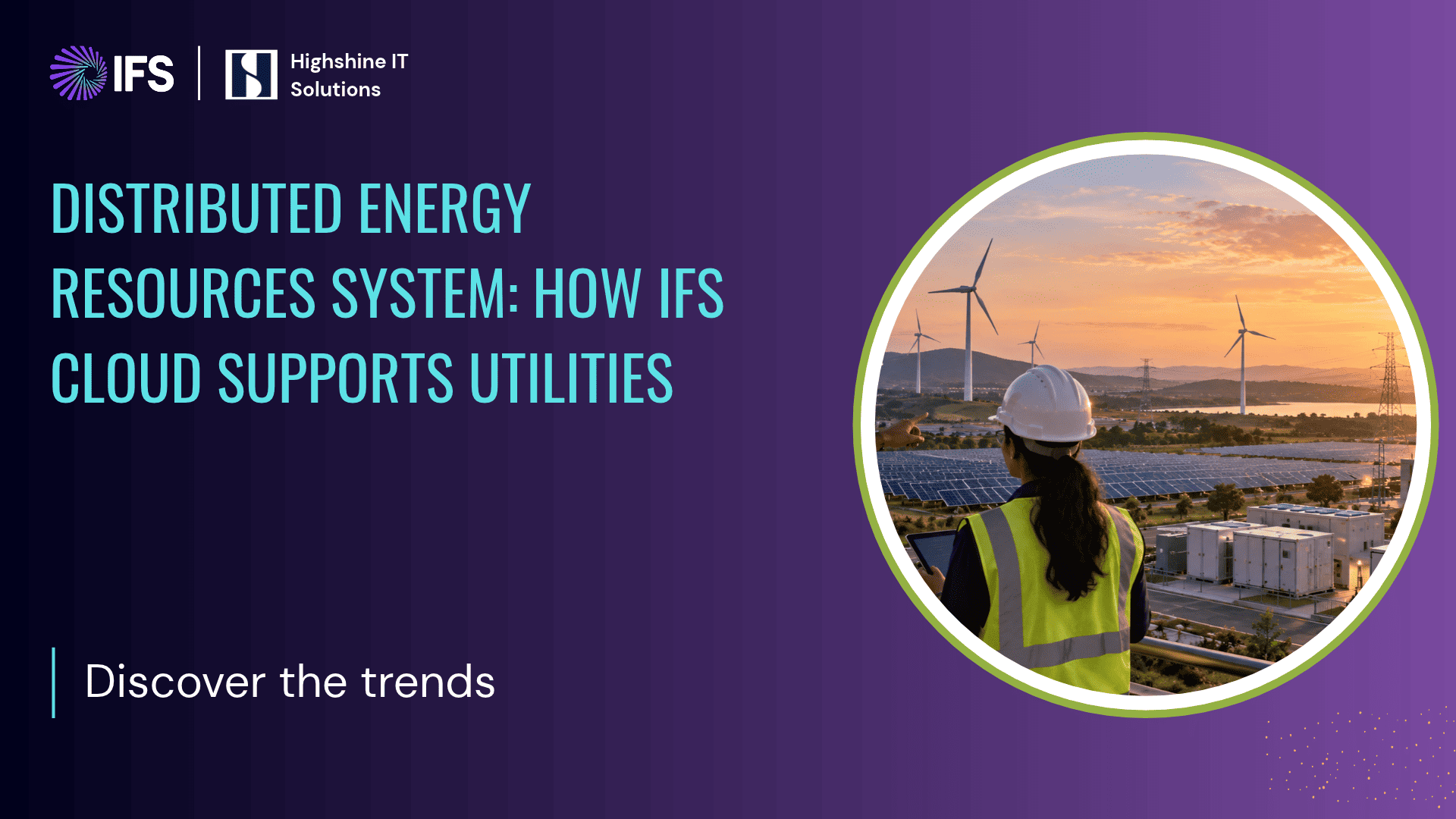
The electricity grid is changing faster than most utilities planned for. Rooftop solar installations, behind-the-meter battery storage, EV charging infrastructure, small wind farms, and community microgrids are connecting to distribution networks at a scale that has pushed interconnection queues to record lengths. US utility-scale battery storage alone reached 28 GW of installed capacity by the end of Q1 2025. That number will continue to grow, and with it, the operational complexity of managing assets that are dispersed, variable, and increasingly owned or operated by third parties rather than the utility itself.
The challenge for utilities is not simply connecting these assets to the grid. It is managing them operationally, maintaining them reliably, deploying field technicians efficiently across geographically scattered sites, planning capital investment across a portfolio that includes aging centralized infrastructure alongside new distributed assets, and demonstrating regulatory compliance at every stage. Most distributed energy resources system management conversations focus on the grid integration and control layer. This guide focuses on the operational management layer, specifically how IFS Cloud ERP gives utilities the platform to manage DER assets, workforces, and compliance in one integrated system.
A distributed energy resources system, in the context of utility operations, refers to the collection of smaller-scale generation and storage assets connected at or near the distribution level: solar PV installations, battery energy storage systems, wind turbines, EV charging networks, combined heat and power units, and demand response-capable customer assets. Unlike centralized generation, these assets are geographically dispersed, often variable in output, and require a fundamentally different approach to maintenance, workforce deployment, and operational planning.
Managing a distributed energy resources system at scale requires more than a DERMS control platform. It requires an operational backbone that connects asset lifecycle management, field service dispatch, maintenance planning, spare parts and procurement, regulatory compliance, capital investment planning, and financial reporting in a single environment. This is where enterprise asset management and ERP capabilities become essential, and where IFS Cloud has built a demonstrated, industry-specific capability that independent analysts and utility customers have consistently recognized.
A utility managing centralized generation has a relatively contained asset base in known locations. A utility managing a distributed energy resources system may have thousands of assets across hundreds of locations, some owned by the utility, some by customers, some by third-party developers. Getting a single, current, lifecycle view of all of these assets, from the moment they are commissioned through their operating life to eventual decommissioning, requires an asset management capability that was designed for distribution-level complexity rather than central plant operations.
Dispatching a technician to a centralized power station is a well-understood process. Dispatching the right technician, with the right skills and the right equipment, to a rooftop solar installation in one suburb and a battery storage system in an industrial zone twenty kilometers away in the same afternoon is a different scheduling problem entirely. Unoptimized field dispatch in a distributed energy management environment is one of the most significant cost drivers utilities face, because unnecessary truck rolls and first-visit failures compound across large workforces at scale.
Solar panels, wind turbines, and battery storage systems degrade according to operating conditions that vary by installation, location, and usage pattern. Calendar-based preventive maintenance schedules designed for conventional equipment do not reflect how DER assets actually behave. A battery system that has been cycled more heavily than expected needs maintenance sooner than its nominal schedule suggests. A solar installation in a high-dust environment requires more frequent cleaning than one in a coastal location. Without condition-based monitoring and intelligent maintenance triggering, utilities either over-maintain assets at unnecessary cost or under-maintain them at reliability risk.
Utilities are currently facing record capital expenditure requirements on two fronts simultaneously: upgrading aging transmission and distribution infrastructure that was not designed for bidirectional power flows, and investing in new DER interconnection capacity to accommodate the volume of solar, storage, and EV projects in their queues. Making optimal investment decisions across this portfolio requires risk-adjusted analysis that connects asset condition data, failure probability, replacement cost, and regulatory requirements in a structured planning environment. Spreadsheet models and disconnected financial systems are not adequate tools for this level of capital allocation complexity.
FERC Order 2222 in the US requires utilities to allow DER aggregators to participate in wholesale markets, fundamentally changing the regulatory relationship between utilities and distributed assets. Regulatory frameworks governing DER interconnection, grid safety, environmental reporting, and Scope 1 and 2 emissions are evolving simultaneously across multiple jurisdictions. Compliance documentation assembled manually from paper records and disconnected systems creates audit exposure that grows with every new regulation and every new asset added to the portfolio.
IFS Cloud is an integrated enterprise platform that combines ERP, Enterprise Asset Management, Field Service Management, and Mobile Workforce Management in a single environment purpose-built for asset-intensive industries. For utilities managing distributed energy resources, this integration is not a convenience. It is the foundation of an operational model where every function, from asset commissioning to field dispatch to capital investment planning, draws from the same real-time data.
ISG's 2025 Buyers Guide scored IFS as the overall leader in power and utilities field service management. IFS is also the only company named as Customers' Choice in both the 2024 and 2025 Gartner Peer Insights Voice of the Customer reports for both Enterprise Asset Management and Field Service Management simultaneously. These recognitions are specific to the utility and energy sector, not general industrial software accolades.
IFS Cloud's utility asset management software manages every stage of a DER asset's life within a single platform. During the planning and design phase, engineering specifications and commissioning documentation are captured against the asset record. As assets enter service, maintenance programmes are configured with multiple trigger types: time-based, meter-based, condition-based thresholds, and IoT-triggered alerts through IFS Operational Intelligence. Throughout the operating life, every maintenance event, failure, modification, and cost posts automatically to the asset record. When an asset reaches end of life, decommissioning workflows, regulatory documentation, and cost reconciliation are handled within the same system. For utilities managing portfolios of solar installations, battery systems, and EV infrastructure across geographically dispersed locations, this single lifecycle view is what makes informed operational and investment decisions possible.
IFS.ai, the embedded industrial AI within IFS Cloud, powers scheduling and dispatch for field technicians across the entire DER asset portfolio. The scheduling engine matches each work order to the right technician based on skills, certifications, current location, parts availability, and travel time, across the entire field workforce simultaneously. When a DER asset generates a condition alert or a preventive maintenance work order, the system identifies the best-available technician and dispatches them with complete job context, asset history, safety requirements, and parts information, without a dispatcher manually working through competing demands. For field service management in utilities managing hundreds of DER sites, this AI-driven optimization directly reduces truck rolls, improves first-visit completion rates, and lowers the cost per maintenance event.
IFS Cloud connects to Azure IoT Hub and integrates with IFS Operational Intelligence to analyze sensor data from solar inverters, battery management systems, wind turbine condition monitors, and EV charging infrastructure. When sensor data indicates a deviation from expected performance, the system automatically generates a work order, verifies parts availability, and initiates procurement requests within a single secure workflow. This condition-based approach shifts DER maintenance from reactive response and calendar-based schedules to intelligence-driven intervention, reducing unnecessary preventive maintenance on assets that are performing well and preventing unplanned failures on assets showing early deterioration signals.
IFS Cloud integrates natively with Copperleaf's Asset Investment Planning capabilities, giving utility asset managers a risk-adjusted decision framework for capital allocation across the full DER portfolio. The system models the financial and operational impact of different investment scenarios, comparing the cost of maintaining aging infrastructure against the cost and timing of replacement, and evaluating where DER expansion investments deliver the highest risk-adjusted return. For utilities facing record capital expenditure requirements across both aging conventional infrastructure and new DER interconnection capacity, this integrated planning capability replaces spreadsheet-based investment modelling with a structured, auditable decision process connected to live asset data.
Permit-to-work workflows, lockout/tagout procedures, safety inspections, and regulatory compliance documentation are embedded directly in IFS Cloud's maintenance execution workflow for every work order on a DER asset. Every action is timestamped, attributed, and stored against the asset's compliance record as the work happens, not assembled afterward. This real-time audit trail satisfies the documentation requirements of regulatory inspections without manual compilation. IFS Energy and Resources has also built specific capabilities to connect DER operational data to Scope 1 and 2 emissions tracking within the same platform, allowing utilities to evaluate asset operational decisions against their emissions impact alongside their financial and reliability outcomes.
IFS mobile applications work fully offline, giving technicians access to work orders, asset records, safety procedures, inspection forms, and job completion capabilities in locations without network connectivity, including rooftop solar installations, rural battery storage sites, and remote microgrid locations. All data captured offline syncs automatically to IFS Cloud when connectivity is restored. For utilities whose DER assets include a significant proportion of remote or difficult-to-access sites, this offline resilience is a baseline operational requirement for the field workforce.
| DER Operational Challenge | Without Integrated ERP | With IFS Cloud |
| Asset visibility across DER portfolio | Siloed data, point-in-time reports | Single lifecycle view from commission to decommission |
| Field technician dispatch to dispersed sites | Manual scheduling, high truck roll cost | AI-optimized scheduling, skills and location matched |
| Predictive maintenance on DER assets | Calendar-based PM, reactive repairs | IFS.ai IoT-triggered condition-based maintenance |
| Capital investment planning | Spreadsheet models, disconnected from asset data | Copperleaf AIP: risk-adjusted portfolio decisions |
| Regulatory compliance documentation | Manual records, audit risk | Digital PTW, LOTO, audit trail built in |
| Workforce in remote or offline sites | Paper-based, delayed sync | Fully offline mobile app, auto-syncs on reconnect |
| Sustainability and ESG reporting | Separate reporting tool, manual data | Scope 1 and 2 emissions connected to asset data |
The case for IFS Cloud in utility DER management is not simply that it covers more features than alternative platforms. It is that the integration between features is native rather than assembled. When a sensor alert from a battery storage system triggers a work order, the work order connects automatically to the right technician through AI scheduling, which confirms parts availability from integrated inventory, which generates a procurement request if parts are missing, which posts the maintenance cost to the asset's financial record upon completion. This end-to-end workflow runs within a single platform rather than requiring coordination across multiple systems.
• IFS Cloud is the only platform simultaneously recognized as Customers' Choice for Enterprise Asset Management and Field Service Management by Gartner Peer Insights in both 2024 and 2025.
• ISG's 2025 buyers guide scored IFS as the overall leader in power and utilities field service management, specifically for the utility sector.
• The integrated Copperleaf AIP capability gives utilities a structured, data-driven framework for capital investment decisions across aging and new DER infrastructure.
• IFS Digital Workers, built on agentic AI workflows, scale operational excellence by integrating with utilities' established environments using both internal and external data sources.
• The platform supports multi-company, multi-country, and multi-currency operations, making it suitable for utilities operating across multiple jurisdictions with different regulatory frameworks.
Deploying IFS Cloud for distributed energy resources system management in a utility environment requires a partner who understands both the platform and the operational realities of managing dispersed, variable, and increasingly complex asset portfolios at scale. Highshine IT Solutions is a specialist IFS implementation partner with experience deploying IFS Cloud EAM, FSM, and ERP capabilities for asset-intensive organizations in energy, resources, and infrastructure.
The Highshine team configures IFS Cloud around the specific structure of each utility's DER portfolio: asset types, maintenance programmes, field workforce model, regulatory compliance requirements, and investment planning framework. Implementation covers process mapping, system configuration, IoT integration planning, data migration from legacy asset management systems, mobile app configuration, field user training, and post-go-live support.
Book a free IFS Cloud consultation with Highshine IT Solutions. Get a platform walkthrough configured to your DER portfolio and workforce structure, and a clear view of how IFS Cloud connects asset management, field service, predictive maintenance, and ESG compliance in one operational environment.
Managing a distributed energy resources system in 2026 means operating a portfolio that is geographically dispersed, technically diverse, subject to evolving regulatory requirements, and growing faster than most utility operational systems were designed to accommodate. The tools that served utilities in a centralized generation model- point-based asset management systems, manual scheduling processes, disconnected compliance records, and spreadsheet-driven capital planning- are not adequate for this level of operational complexity.
IFS Cloud gives utilities an integrated platform where DER asset lifecycle management, AI-optimized field service dispatch, IoT-connected predictive maintenance, risk-adjusted capital investment planning, and regulatory compliance documentation operate from a single, real-time data environment. Recognized as the overall leader in power and utilities field service management by ISG in 2025, and as Customers' Choice for both EAM and FSM by Gartner Peer Insights, IFS Cloud is the most validated and most capable enterprise platform available for utilities managing the operational complexity of the distributed energy transition.
1. What is a distributed energy resources system?
A distributed energy resources system refers to the collection of smaller-scale generation and storage assets connected at or near the distribution level of the electricity grid, including solar PV installations, battery energy storage systems, wind turbines, EV charging infrastructure, combined heat and power units, and demand response-capable customer assets. Managing a distributed energy resources system operationally requires asset lifecycle management, field workforce coordination, predictive maintenance, capital investment planning, and regulatory compliance capabilities that go beyond traditional utility management tools.
2. How does IFS Cloud support distributed energy management for utilities?
IFS Cloud supports distributed energy management by providing an integrated platform that connects DER asset lifecycle management, AI-optimized field service dispatch, IoT-triggered predictive maintenance, capital investment planning through Copperleaf AIP, regulatory compliance documentation, and ESG emissions tracking in a single environment. This integration means that operational events, such as a sensor alert from a battery storage system, automatically trigger maintenance work orders, technician dispatch, parts verification, and cost posting without manual coordination between separate systems.
3. What makes IFS Cloud different from standalone DERMS platforms?
Standalone DERMS platforms focus on grid control, real-time dispatch optimization, and DER aggregation for market participation. IFS Cloud focuses on the operational management layer: maintaining DER assets through their lifecycle, deploying field technicians efficiently across dispersed sites, planning capital investment across the portfolio, and ensuring regulatory compliance at every stage. These two capability layers are complementary rather than competing. IFS Cloud's IoT integration capabilities allow it to connect with DERMS and SCADA systems to pull condition data that drives maintenance and operational decisions within the IFS environment.
4. How does IFS Cloud handle field service for dispersed DER assets?
IFS Cloud uses IFS.ai to optimize the scheduling and dispatch of field technicians across the entire DER asset portfolio. The scheduling engine considers technician skills, certifications, current location, parts availability, and travel time simultaneously across the full workforce. When a DER asset generates a work order, the system identifies the optimal available technician and dispatches them with complete job context, asset history, and safety requirements. The IFS mobile app works fully offline for sites without reliable connectivity, with automatic sync when connection is restored.
5. Can IFS Cloud support predictive maintenance for solar, battery, and wind assets?
Yes. IFS Cloud connects to Azure IoT Hub and integrates with IFS Operational Intelligence to analyze condition data from solar inverters, battery management systems, wind turbine monitors, and EV charging infrastructure. When sensor data indicates a deviation from expected performance, the system automatically generates a maintenance work order, verifies parts availability, and initiates procurement if needed. This condition-based approach reduces unnecessary preventive maintenance on well-performing assets and prevents unplanned failures on assets showing early deterioration signals.
6. How does IFS Cloud address ESG and emissions reporting for utilities?
IFS Energy and Resources has built specific capabilities to connect DER operational data to Scope 1 and 2 emissions tracking within the IFS Cloud platform. Asset operational decisions, maintenance interval changes, and capital investment choices can be evaluated against their emissions impact alongside their financial and reliability outcomes. This native connection between asset management and ESG reporting removes the manual data collection that makes most utilities' emissions reporting slow and difficult to audit.
7. What industry recognition has IFS received for utilities and energy management?
ISG's 2025 Buyers Guide scored IFS as the overall leader in power and utilities field service management. IFS is the only company named as Customers' Choice in both the 2024 and 2025 Gartner Peer Insights Voice of the Customer reports for Enterprise Asset Management and Field Service Management simultaneously. An energy and utilities IT professional quoted in the Gartner EAM report described IFS as having 'deep industry functionality for an asset-centric, service-oriented organization.' These recognitions reflect the experience of utility and energy sector customers running IFS in production environments.