


 Hari Gautham Somasundaram
 03/07/2026
 Odoo
Odoo 0 Comments
All-in-One Business Management Software for Small Businesses
Running a business means wearing a lot of hats at once. You are managing customers, tracking invoices, keeping an eye on stock, chasing payments, and trying to grow, all at the same time. Most businesses start out patching this together with a mix of tools: a spreadsheet here, a standalone CRM there, an accounting app somewhere else. It works until it does not.
The moment your operations start to scale, those disconnected tools become the problem. Data lives in different places, your team spends hours reconciling information that should sync automatically, and decisions get made on outdated numbers. This is exactly where the right business management software makes the difference between an operation that struggles to keep up and one that grows with confidence.
What Is Business Management Software?
Business management software is a platform that brings all the tools an organisation needs to run its daily operations into a single system. Rather than using separate applications for sales, accounting, inventory, HR, and customer support, a proper business management system connects all of these functions so that information flows between them automatically. You get something most organisations never fully experience: complete operational visibility. You can see what is happening across every function from one place and make faster, better decisions because of it.
This is also where Business Process Management (BPM) software and business process management (BPM) tools come in. Beyond just storing data, the best platforms automate the workflows that connect these processes, so your team spends less time on repetitive tasks and more time on work that actually moves things forward.
Why Odoo Is the Best All-in-One Business Management Software
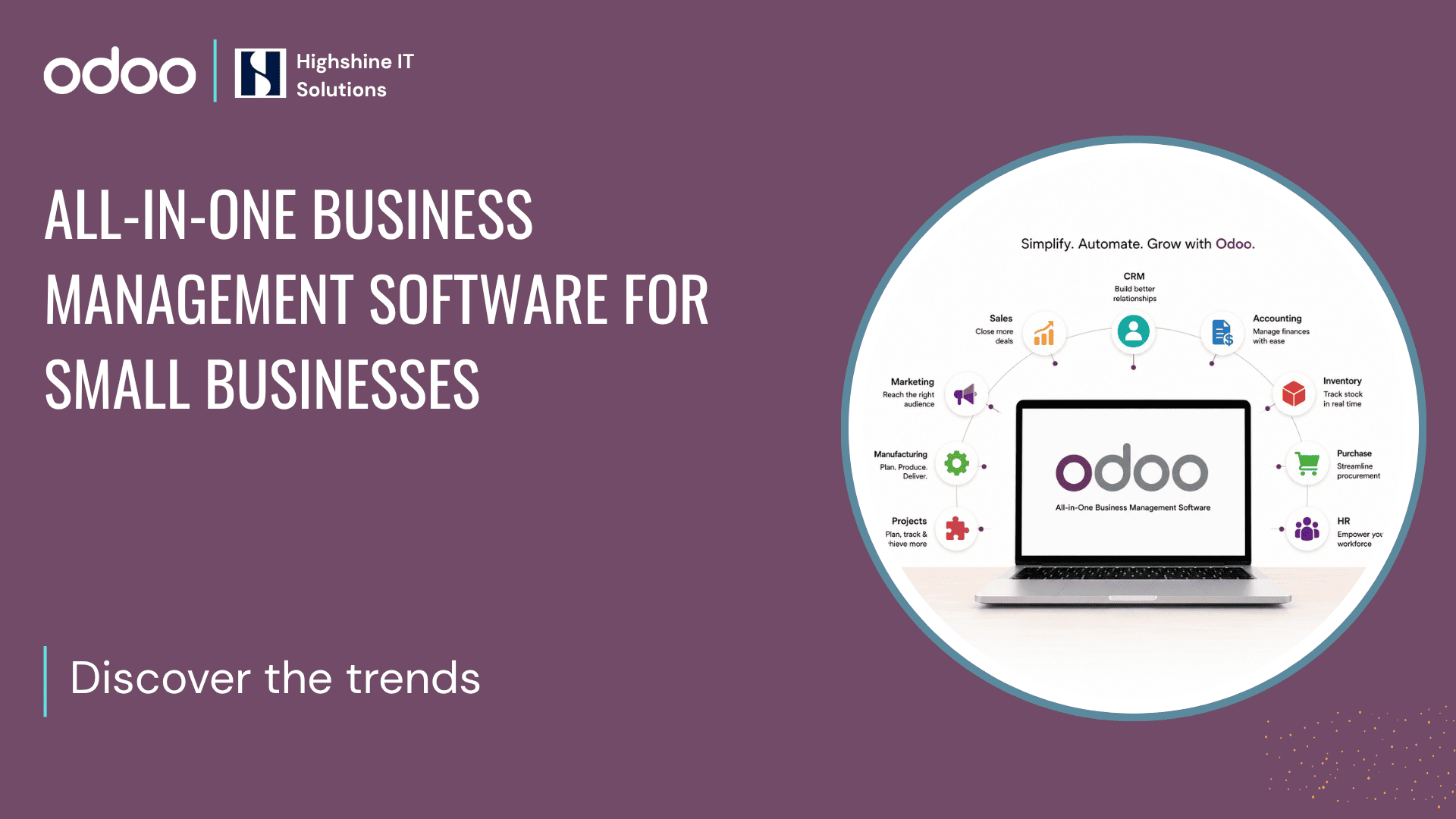
There are plenty of tools on the market that do one thing well. Odoo is different because it does everything well and connects all of it natively. It is an open-source, modular ERP platform that covers every function a growing business needs, from the first customer interaction all the way through to invoicing, fulfilment, and post-sale support.
What makes Odoo genuinely stand out is the combination of depth and affordability. Enterprise-level ERP systems have traditionally been priced out of reach for most growing businesses. Odoo changes that. The Community edition is free, and the Enterprise edition is priced per user per month, which means any size team can access a fully connected business management system without the steep licensing fees that come with tools built exclusively for large corporations.
It is also modular. You start with the modules your business needs today and expand as your requirements grow. There is no pressure to buy features you are not ready for, and no need to migrate to a different platform when your team scales up. Odoo grows with you.
Key Odoo Modules That Power Business Growth
CRM and Sales
Odoo CRM gives your sales team a clear, visual pipeline to manage every lead and opportunity. Communications are tracked, follow-ups are scheduled, and quotations can be created directly from within the CRM without switching to another tool. When a deal is won, the order flows automatically into invoicing and inventory, eliminating double entry and reducing errors across the board.
Accounting and Invoicing
Odoo's accounting module handles everything from invoicing and bank reconciliation to expense tracking and tax management. It connects directly to your sales and purchase data, so financial records update in real time as transactions happen. For any business that wants accurate books without spending hours on manual reconciliation, this alone delivers a significant and immediate return.
Inventory and Warehouse Management
Managing stock manually is one of the fastest ways to lose money in a product-based business. Odoo's inventory module tracks stock levels in real time, triggers purchase orders automatically when quantities fall below a set threshold, and syncs with sales and delivery operations so fulfilment runs smoothly without constant manual intervention.
HR and Payroll
As your team grows, managing people manually becomes a real operational burden. Odoo's HR module covers recruitment, onboarding, attendance, leave management, and payroll in one place. Managers maintain a clear view of their team, and employees can handle their own requests through a self-service portal, which cuts down the administrative back-and-forth considerably.
Project Management
Odoo's project module gives teams a structured way to plan and track work, whether that is client deliverables, internal initiatives, or product development. Tasks can be linked to customer records, timesheets, and invoices, so the business always has a clear picture of how effort connects to revenue and where time is actually going.
eCommerce and Point of Sale
For businesses that sell both online and in person, Odoo brings eCommerce and POS into the same system as inventory and accounting. There is no separate sync needed between your online store, your physical checkout, and your stock records. Everything updates together, which is a significant operational advantage for retail, hospitality, and distribution businesses.
Marketing Automation and Email Marketing
Odoo includes marketing tools that were once available only on standalone platforms. You can run targeted email campaigns, automate follow-up sequences, and track the performance of every campaign against actual revenue, all from the same system your sales and customer teams are already working in.

How Odoo Helps Your Business Scale
Growth usually exposes every gap in your operational setup. Processes that worked at an early stage stop working when volume increases. The organisations that scale successfully are the ones that have the right systems in place before the growth happens, not scrambling to replace tools after the cracks appear.
Odoo is built with this in mind. Because all modules share a single database, adding a new function like manufacturing, helpdesk, or field services does not require integration work or data migration. Your existing information is already there, and the new module simply adds capability on top of it. This makes Odoo one of the few business management systems that genuinely grows alongside the organisation rather than becoming an obstacle to it.
The reporting and analytics layer plays a significant role here too. As operations scale, decision-making becomes more complex. Odoo's real-time dashboards give owners and managers visibility across every function, from sales pipeline and cash flow to inventory levels and project delivery, from a single screen. That kind of visibility is what allows leaders to make confident decisions rather than reactive ones.
Odoo vs. Standalone Tools vs. Spreadsheets
To understand the real value of an all-in-one business management system like Odoo, it helps to see how it compares with the alternatives most organisations rely on before making the switch.
The comparison makes clear that standalone tools and spreadsheets create more work over time, not less. As operations grow, the hidden cost of managing multiple subscriptions, reconciling data manually, and filling gaps between disconnected systems adds up significantly in both time and money.
How Odoo Benefits as Your Business Process Management Software
Choosing Odoo as your core business process management (BPM) software delivers advantages that go well beyond simply replacing your existing tools.
How to Implement Odoo by choosing the Right Partner
Odoo offers an enormous amount of capability out of the box, but getting the implementation right from the start is what determines whether that capability translates into real business results. A poorly configured system, one that does not reflect how your team actually works, creates frustration rather than efficiency.
From initial consultation and system setup through to user training, data migration, and ongoing support, Highshine handles every stage of the implementation, so your team can get up and running quickly, without the trial-and-error that often comes with self-managed deployments. Whether you are implementing Odoo for the first time or looking to extend an existing setup with new modules, Highshine brings the expertise to make the project a success.
Conclusion
Businesses running on disconnected tools are spending more time managing software than managing their actual operations. The right business management software should do the opposite: take the administrative load off your team, connect your workflows so information moves without manual effort, and give you the visibility you need to grow with confidence.
Frequently Asked Questions
1. What is the best business management software for small businesses?
Odoo is one of the strongest options available for businesses at any stage because it covers CRM, accounting, inventory, HR, project management, and more in a single connected platform. Unlike standalone tools, everything shares the same data, which eliminates manual reconciliation and gives leadership real-time visibility across every function.
2. Is Odoo suitable for a startup or early-stage business?
Yes. Odoo's Community edition is free and fully functional for early-stage teams with no licensing cost. As the business grows, the Enterprise edition adds advanced features and dedicated support at a per-user monthly rate that remains affordable compared with traditional enterprise ERP alternatives.
3. What is the difference between a business management system and BPM software?
A business management system covers the operational tools an organisation uses, including CRM, accounting, inventory, and HR. Business Process Management (BPM) software focuses specifically on automating and optimizing the workflows that connect these functions. Odoo combines both: it provides the core operational modules and the workflow automation layer in a single platform.
4. How long does an Odoo implementation take?
A straightforward implementation covering a small number of modules can be completed in a few weeks. More complex setups involving data migration, integrations, or customization may take longer. Working with an experienced Odoo partner like Highshine IT Solutions significantly reduces the time to go live and the risk of configuration errors.
5. Can Odoo replace all the separate tools a business currently uses?
In most cases, yes. Odoo is designed to replace standalone tools for CRM, invoicing, inventory, email marketing, HR, project management, and eCommerce. Businesses that consolidate onto Odoo typically reduce their total software cost while gaining better visibility and fewer operational gaps between functions.
6. What post-implementation support does Highshine IT Solutions provide?
Highshine provides ongoing support covering system maintenance, user queries, module expansions, and performance reviews. The team remains engaged as the business evolves so that the Odoo configuration continues to reflect how the organisation actually operates, rather than becoming outdated as processes change.


